TotemX Labs
Profile set up by Edverise AISet Up By Edverise AI
Edverise AI built this profile by analyzing thousands of data points across the web. If you own this business, become an Edverise partner to manage and update your profile.
Overview
$5,000+
Min Project Size
$50 - $99/hr
Avg Hourly Rate
2 - 9
Employees
2018
Year Founded
ABOUT TOTEMX LABS
Welcome to the real world!
Stats Pragmatic AI: Smart Solutions for Real-World Business Results We convert intricate technological possibilities into strategic benefits for businesses. Our comprehensive strategy connects cutting-edge AI abilities with practical challenges, providing solutions that lead to significant results across various sectors. Our Expertise Our goal goes beyond merely showcasing technology; we design business transformation through intelligent and practical AI solutions. Explore our real case studies: https://totemxlabs.com/#casestudies Read our testimonials: https://totemxlabs.com/#testimonials
Tech Stack
DjangoFlutterAngularPythonSQL
Languages Spoken
EnglishGerman
HIGHLIGHTS
$5,000+
Min Project Size
$50 - $99/hr
Avg Hourly Rate
2 - 9
Employees
2018
Year Founded
Services
Focus
Industries
Clients
Services Provided
14% Generative AI
13% AI Strategy & Roadmap Consulting
7% LLM Integration & Prompt Engineering
33% Web App UI Design
33% Custom Web Application Development
About the Team
OUR STORY
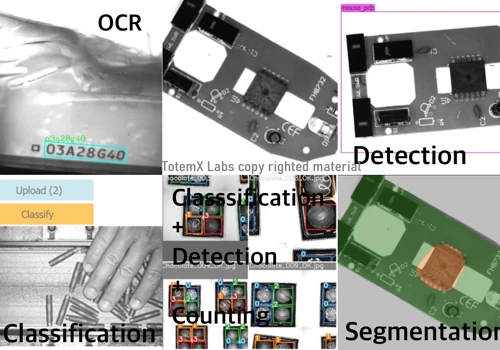
TotemX Labs is a global AI consulting firm dedicated to delivering tailored, end-to-end machine learning solutions that yield clear business impact. With expertise spanning LLMs, NLP, generative AI, data engineering, and computer vision, they navigate complex data challenges to create practical, scalable deployments. Their process emphasizes discovery, precise solution design, collaborative development, and confident deployment, ensuring reliable model performance across various industries. Leveraging advanced tools and techniques, TotemX Labs focuses on client partnership, enabling sustainable AI adoption and data-driven decision-making. Their commitment to quality and innovation is reflected in long-term client relationships and successful project outcomes, transforming data into actionable insights and competitive advantage.
Projects & Clients
Project Size & Rate
Minimum Project Size
$5,000+
Average Hourly Rate
$50 - $99/hr