Kodexo Labs
For Kodexo Labs
Is this your company?
Edverise AI compiled this profile from public information so buyers could find you. Claim it to edit every field, add your portfolio and respond to reviews.
Claim & verify for free
Manage the listing yourself. Verify by work email or company domain to earn the verified badge.
Suggest an edit
Not ready to claim? Send a correction and our team will review and update verified factual errors.
Overview
$10,000+
Min Project Size
$50 - $99/hr
Avg Hourly Rate
50 - 249
Employees
2021
Year Founded
ABOUT KODEXO LABS
Your AI-Native Development Partner
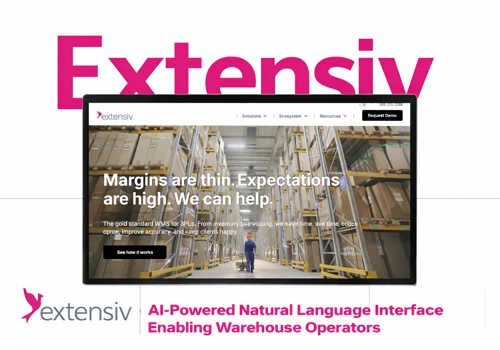
Your Partner in AI-Native Development. Kodexo Labs specializes in creating web applications, mobile applications, and advanced AI systems that are deployed to production and remain operational. We have successfully launched 51 products and hold a rating of 4.9/5 on Clutch based on 13 verified reviews. Our solutions serve over 50,000 users in more than 30 countries, with a client retention rate of 94%. Our offerings include: • AI agents and autonomous systems that streamline complex multi-step workflows • RAG-powered search and knowledge systems designed for handling large volumes of structured data • Generative AI solutions, including LLM fine-tuning, voice AI, and intelligent tutoring • Comprehensive web and mobile applications developed with AI considerations integrated at all levels • Tailored software solutions for sectors such as Healthcare, EdTech, Fintech, E-Commerce, and Automotive. Demonstrated results include: • 85% faster search capabilities for Diesel Laptops (Inc. 5000) using a self-hosted AI solution across over 160,000 repair records • 90%+ accuracy in SQL for Extensiv (Inc. 5000) involving 207 tables and 4 databases • Over $1.5 million in first-year revenue from Teacher AI, catering to more than 50,000 users in 30+ countries. We don’t just integrate AI into existing systems; we incorporate it from the ground up, from architecture through to production. With a team of more than 60 engineers and PhD-level AI expertise, we are based in Austin (HQ) and have additional locations in NYC, SF, Chicago, London, and Karachi. Established in 2021.
Tech Stack
PythonTypescriptReduxJavaScriptKotlinDjangoNodeJSReactNextJSReact NativeAngularFlutter+2 more
Languages Spoken
English
HIGHLIGHTS
$10,000+
Min Project Size
$50 - $99/hr
Avg Hourly Rate
50 - 249
Employees
2021
Year Founded
Services
Focus
Industries
Clients
Services Provided
33% Custom Web Application Development
18% Mobile App Development (iOS & Android)
12% AI Model Fine-Tuning & Training
5% Custom AI Chatbot Development
15% Generative AI
2% AI Strategy & Roadmap Consulting
15% LLM Integration & Prompt Engineering
About the Team
OUR STORY
Our Journey Began in 2021 with engineers who create and deliver, rather than consultants who merely offer advice and depart. We kicked off our journey on Upwork, demonstrating our capabilities alongside the top teams globally. This experience solidified our fundamental belief: AI falters not during prototyping, but in the transition from demonstration to production. Our mission is to bridge that divide. We have successfully launched 51 products, earned a 4.9/5 rating on Clutch, and grown to over 60 engineers in 6 locations, all under expert AI leadership with PhDs. Our client retention rate stands at 94%. We don't simply integrate AI; we develop with it.
Projects & Clients
Project Size & Rate
Minimum Project Size
$10,000+
Average Hourly Rate
$50 - $99/hr
Locations
Headquarters
535 Mission Street
San Francisco, California, United States 94105
Headquarters
110 North Wacker Drive United States 60606
Chicago, Illinois, United States 60606