ElectroHouse App
**E-COMMERCE ELECTROHOUSE APP Development**
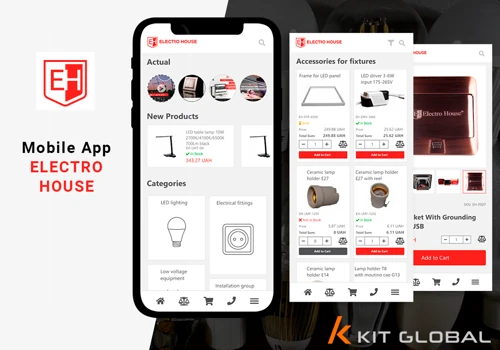
The ElectroHouse mobile e-commerce application was developed to streamline user interactions with the online electronics store. This app enables users to conveniently shop for products via their mobile devices. Its versatile architecture supports three distinct user roles: manager, client, and unregistered users, which alters product value and overall functionality based on the user's role.
**Technology Stack:**
- Version 1: Angular 6, MySQL, PHP7, jQuery, AJAX, Cordova, Ionic 3, HTML5, Material Design, Human Interface Guidelines.
- Version 2: React Native, TypeScript, Adobe XD (launched in 2021).
- API: REST API, LiQPay.
- Design: Adobe XD, Photoshop.
We crafted and launched this mobile application, equipping each manager with an installed version on their mobile device, while maintaining an admin panel for oversight. This allows managers to monitor order processes, add new categories, and products.
**Client Overview:**
ElectroHouse has supplied electrical products and installation services since 2006, operating in both B2B and B2C sectors across various regions while also engaging directly with end users. Over the years, it has established itself as a well-known brand. Our research into the company's operations revealed a methodical approach to internal processes and a strong focus on customer interaction. The ElectroHouse team is always available to provide advice and assist with the launch of partner outlets, installations, or project estimations. The company has also created a training platform for its employees and partners.
**Goals and Objectives:**
After consultations with the client, we outlined the key issues and objectives for the application.
- **Objective 1:** Increase customer acquisition and sales. The app needed to be user-friendly and offer an intuitive interface, enabling dealers and end consumers to register or log in, explore the product catalog, place orders, and make payments with their coordinates.
- **Objective 2:** Brand Image. Launching a mobile application signifies the company’s advancement and positions it as a market leader, highlighting its customer-centric approach.
- **Objective 3:** Service Quality. The app facilitates continuous communication, with plans for chat features and other enhancements.
- **Objective 4:** Employee Productivity. The app also streamlines managers' tasks.
**Resources - Team and Time:**
We recognized that the project's scale demanded substantial resources, yet timely completion was essential. Accordingly, we assigned an adequate number of senior and mid-level specialists. The first version took four weeks to develop.
**Tools & Platforms:**
The application was designed for major mobile operating systems, iOS and Android. For the frontend in the first version, we utilized Ionic Framework 3, which helped to reduce both development time and costs. The application is structured as a client-server model, where the client part runs on users' mobile devices and interacts with a PHP-based server through web services (API) with data exchanged in JSON format.
**Project Progress and Outcomes:**
The initial phase included creating technical specifications and designing the mobile application. Customer requirements were thoroughly analyzed and organized. Simultaneously, UI/UX design was developed alongside system architecture and user interaction pathways. Results were presented graphically and were content-rich. Throughout this phase, our team maintained active communication with the customer’s representatives, ensuring that we addressed all client needs and the interests of future users. The design stage is critical, as it ultimately shapes user comfort and attractiveness, significantly influencing its popularity.